

When Fire Strikes: The Legal and Commercial Risks Every UK SME Should Understand
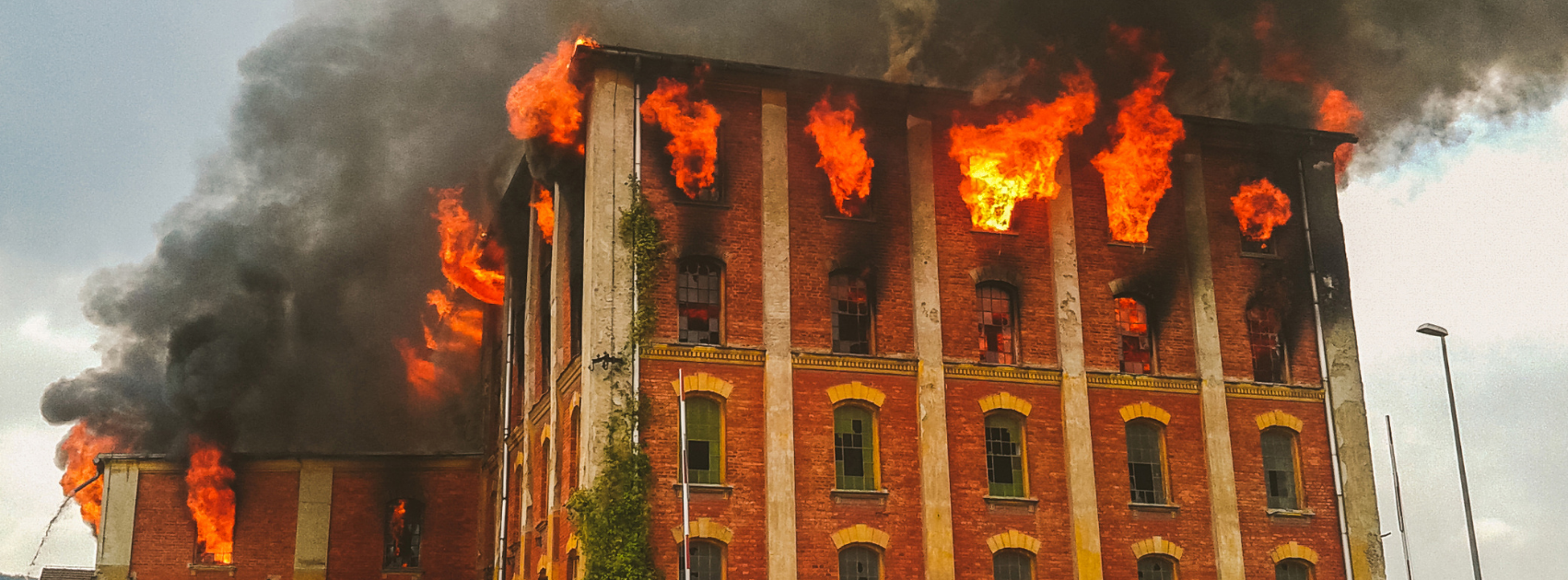
For many SMEs, a serious fire is viewed primarily as a property damage issue. In reality, a major fire can trigger a cascade of legal, contractual and financial problems that threaten the very survival of a business. Understanding these risks before disaster strikes can make the difference between recovery and insolvency. In this article, Partner Jonathan Lawrence and Senior Associate Stephen Scott set out the key risks and how to prepare for them.
A Fire Can Shut Down More Than Your Premises
A serious fire can bring operations to an immediate halt. The physical damage is obvious, but the wider consequences are often underestimated. Businesses may suddenly face:
- Loss of trading income
- Inability to fulfil customer orders
- Damage to stock, equipment and records
- Breach of contractual obligations
- Regulatory investigations
- Reputational damage
For many SMEs, cash flow becomes the primary concern within days of the incident, long before rebuilding works begin.
Business Interruption Insurance: The Cover Businesses Hope They Never Need
One of the most important protections available to SMEs is business interruption (BI) insurance. RLK has extensive experience in this field, acting for SMEs to recover business interruption losses suffered during the Covid-19 pandemic.
Property insurance covers the cost of repairing buildings and replacing equipment. BI insurance covers the financial consequences of the interruption to trading, such as lost gross profit, the increased cost of working from temporary premises and continuing overheads. Most BI cover responds only if the property damage claim succeeds, so the two usually stand or fall together.
Many businesses discover after a fire that their indemnity period is too short. Rebuilding, replacing specialist equipment, obtaining planning permission and winning back customers can take far longer than 12 months, so consider whether 24 or 36 months would be more appropriate.
A fire does not have to reach your premises to stop your business. A fire at a key supplier, customer or utility can halt trading just as effectively, but is covered only if the policy includes the relevant extension.
Underinsurance: A Common and Costly Problem
Where sums insured are too low, insurers may apply the “average” clause and reduce claims proportionately. If a building that should have been insured for £2 million was insured for only £1 million, an insurer may pay only half of any claim, however small. The same applies to BI cover, where the sum insured must reflect the full indemnity
period, not just a single year’s profit. With construction and material costs rising, regular valuations are essential.
Tenant Businesses: What Happens to Your Lease?
After a fire, tenants need to know whether rent is suspended and for how long, who must reinstate the premises, and whether the lease can be terminated if the premises cannot be restored within a set period. The answers depend entirely on the lease wording, and not all leases provide the protection tenants assume. Landlords and tenants should review these provisions before an incident occurs, not after.
What About Customer Goods?
Warehouses, repairers, manufacturers, retailers and logistics operators often hold goods belonging to customers. If those goods are lost or damaged in a fire, the business may face claims for negligence, breach of contract or breach of bailment. Where it holds goods for reward, the burden will usually be on the business to prove that it took reasonable care. Check that liability caps are properly incorporated into customer contracts, and that your insurance covers goods held in trust or custody, not just your own assets.
Directors’ Responsibilities During a Crisis
Directors must continue to comply with their duties under the Companies Act 2006. Particular care is required where lost revenue threatens solvency, creditors cannot be paid when due or long-term viability becomes uncertain. Early professional advice can protect both the business and the directors themselves. Our team at RLK specialise in advising directors and businesses in times of crisis.
Health and Safety Investigations
A serious fire may prompt investigations by the fire and rescue service, the Health and Safety Executive, local authorities and environmental regulators, as well as civil claims where anyone is injured. Up-to-date, documented fire risk assessments, staff training and safety procedures are essential.
Preparing Before Disaster Strikes
Key steps include:
- Review insurance annually. Check sums insured, BI cover, indemnity periods and extensions, and that you can comply with policy conditions on alarms, sprinklers and hot works.
- Understand your lease. Review rent suspension, reinstatement and termination provisions.
- Protect customer goods. Confirm that insurance arrangements and liability limits are fit for purpose.
- Maintain a business continuity plan. Identify alternative premises, suppliers and key personnel.
- Keep records accessible. Store key contracts, financial records and operational data securely and remotely.
- Take legal advice early. Do so before engaging with your insurer on the substance of the claim, but never let it delay notifying them. If someone else caused the fire, preserve the evidence: uninsured losses may be recoverable from them.
Download our one-page checklist, RLK Fire at Your Business: The First 72 Hours Checklist PDF, and keep a copy with your business continuity plan.
Final Thoughts
Insurance remains a vital part of any recovery strategy, but many of the most significant risks arise from contractual and legal issues that businesses overlook until it is too late. The best protection is understanding how insurance, leases, customer obligations and business continuity planning interact before a disaster occurs. Our team at RLK are on hand to help, at a time that will inevitably be stressful and full of uncertainty.
The time to review those arrangements is now, not when the fire brigade arrives. To discuss your insurance, lease or contractual arrangements, contact Jonathan Lawrence or Stephen Scott at RLK Solicitors.
A more detailed two-part guide to these issues will follow shortly.
This article is general information on the law of England and Wales, not legal advice. Specific advice should be taken on any particular matter.
#BusinessInterruption #InsuranceLaw #CommercialLeases #BusinessContinuity #SME

Stephen Scott
Stephen is a Senior Commercial Litigation Solicitor in RLK Solicitors' Dispute Resolution and Litigation team. He specialises in complex and high-value commercial disputes, including civil fraud, freezing injunctions, shareholder and contractual disputes, contentious insolvency, arbitration, and the enforcement of judgments across multiple jurisdictions.
